News
Aarhus University contributes new knowledge on green marine fuels at the SETAC Europe 36th Annual Meeting (17-21 May 2026)
Aarhus University contributes new knowledge on green marine fuels at the SETAC Europe 36th Annual Meeting (17-21 May 2026)
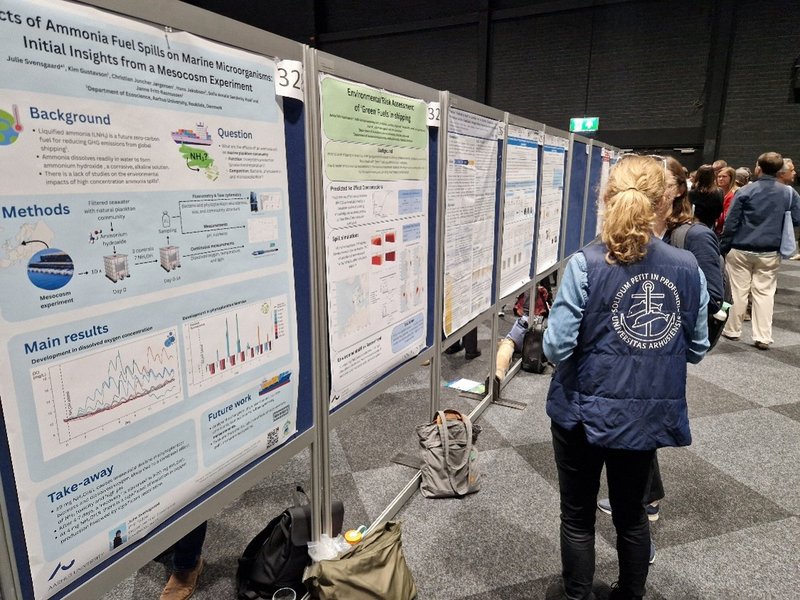
Aarhus University (Ecoscience) presented two posters at the SETAC Europe 36th Annual Meeting in Maastricht:
- “Environmental Risk Assessment of ‘Green’ Fuels in Shipping” by Janne Fritt-Rasmussen
- “Effects of Ammonia Fuel Spills on Marine Microorganisms: Initial Insights from a Mesocosm Experiment” by Julie Svensgaard
Both posters were part of the session “Environmental Risks of (New) Chemicals Used in Maritime Transport” and presented results from literature reviews and modelling of ammonia and methanol, as well as findings from in situ experiments with ammonia.
Together, the presentations provided insight into Aarhus University’s work on assessing the environmental effects of ammonia and methanol as new alternative marine fuels (Work Packages 2 and 3).
Expanding MATFuels Northward: New PhD Project Focuses on Green Fuel Spills in the Arctic
Expanding MATFuels Northward: New PhD Project Focuses on Green Fuel Spills in the Arctic
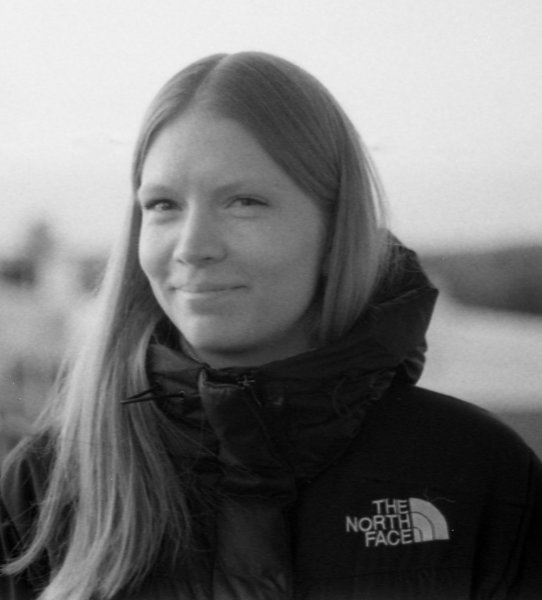
On 1 September 2026, Sofie Amalie Sønderby Rask joined the Department of Ecoscience at Aarhus University as a PhD fellow associated with the MATFuels project.
The new PhD project complements the existing MATFuels research by extending investigations from temperate waters to Arctic ecosystems, where declining sea ice cover driven by climate change is expected to increase shipping activity. The project will focus on plankton communities at the base of the marine food web. Arctic plankton are uniquely adapted to low temperatures, strong seasonal variations, and slow growth rates, factors that may influence both the fate and behavior of green fuels in the marine environment and their ecological impact following accidental spills.
Through a combination of laboratory studies and field-based experiments in Greenland, Sofie will investigate how alternative shipping fuels impact Arctic marine organisms and ecosystems. The results will contribute to a broader understanding of the environmental consequences of green fuel spills across diverse marine environments.
The project is funded by A/S Dampskibsselskabet Orient’s Fond.
Presentations at Danish Marine Science Meeting 20-22 January 2026
Presentations at Danish Marine Science Meeting 20-22 January 2026
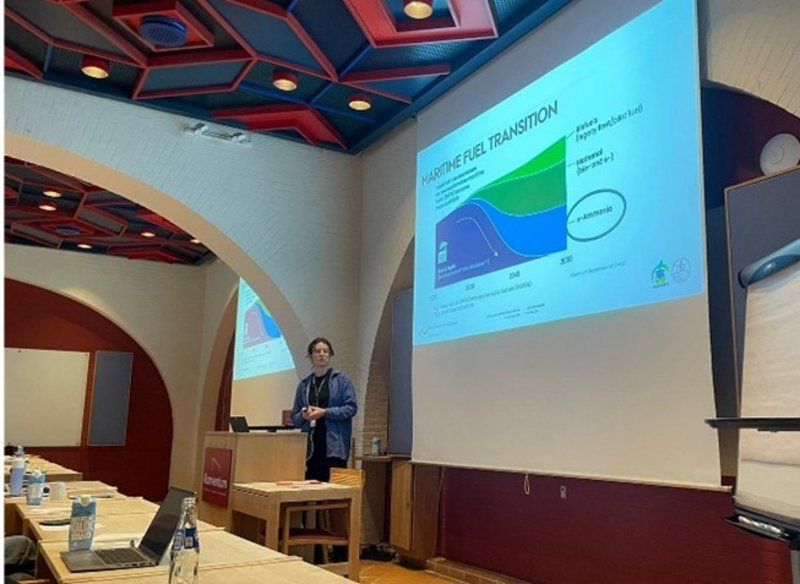
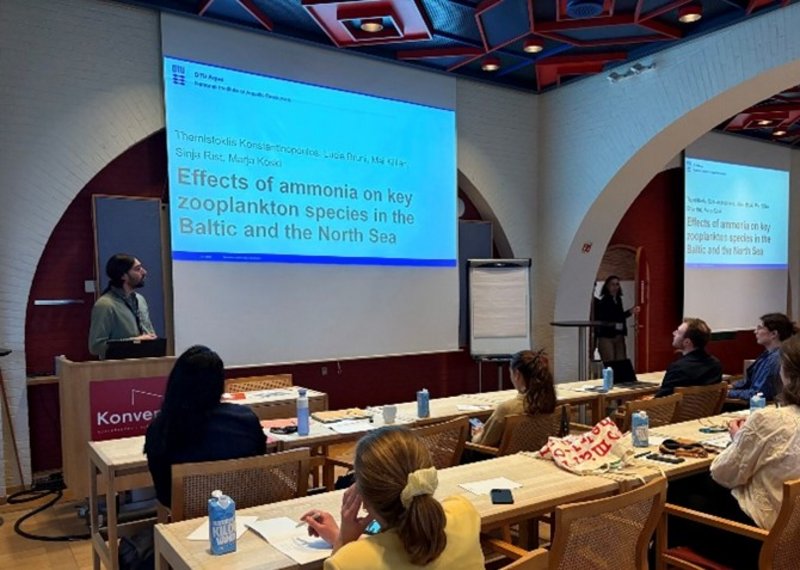
PhD students from the Technical University of Denmark (DTU Aqua) and Aarhus University (Ecoscience) presented their latest findings from the MAT‑Fuels project at the 23rd Danish Marine Science Meeting (Havforskermødet) 2026, contributing to the session on biological effects of marine pollution and multiple stressors.
Their talks - titled “Effects of Ammonia on Key Zooplankton Species in the Baltic and North Sea” and “Potential Ecological Impacts of Ammonia Fuel Spills: A Mesocosm Study on Coastal Plankton” - showcased results from the ongoing experimental work on ammonia exposure in marine algae and copepods.
Together, the presentations offered new insights into how elevated ammonia concentrations may affect key primary producers and zooplankton, highlighting potential ecological consequences of future ammonia‑based fuel spills or emissions.
Link to conference here: https://konferencer.au.dk/en/marine-science-meeting-2026
Presentation at SETAC YES 11-14 August 2025
Presentation at SETAC YES 11-14 August 2025
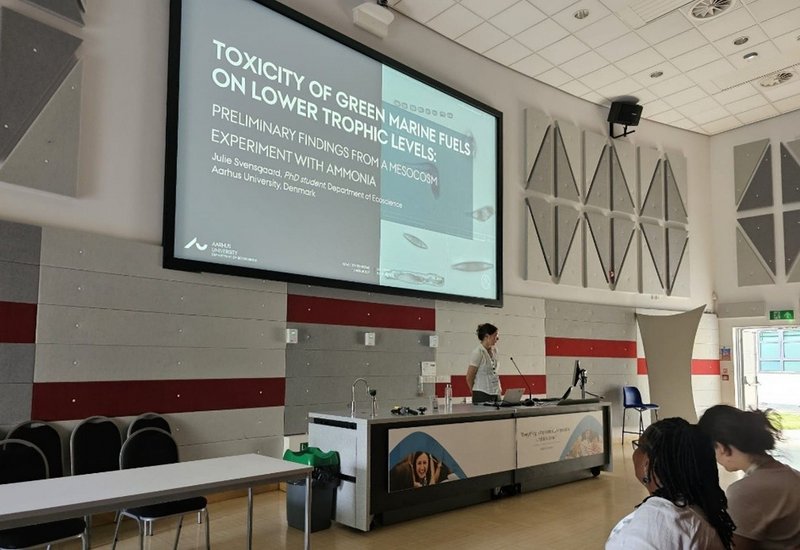
Aarhus University participated with a presentation in the session “Aquatic Ecotoxicology” at the 2025 SETAC Young Environmental Scientists Meeting conference, held in York, England. The conference – organised by and for early-career environmental researchers - brought together young scientists from around the world.
PhD fellow Julie Svensgaard presented the early findings from an ammonia mesocosm experiment on plankton, titled “Toxicity of Green Marine Fuels on Lower Trophic Levels: Preliminary Findings from a Mesocosm Experiment with Ammonia”.
The conference provided a unique opportunity to connect with peers using similar research methodologies and to exchange ideas within the broader field of environmental science.
Conference Highlight: Poster Presentation at SETAC Europe 2025
Conference Highlight: Poster Presentation at SETAC Europe 2025
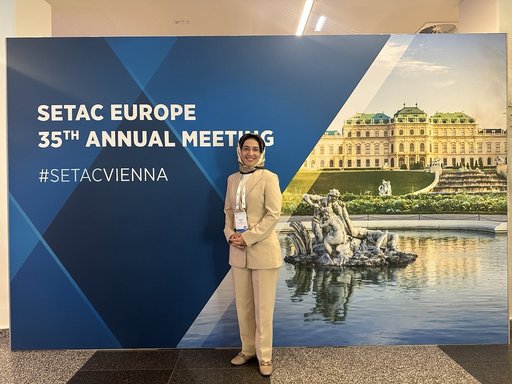
University of Southern Denmark (SDU-IGT) presented a poster at the SETAC Europe 35th Annual Meeting in Vienna, titled “Advancing Maritime and Aviation Fuels Through Prospective LCA: A Safe and Sustainable by Design Approach.” The poster focused on the environmental performance of emerging sustainable fuels—particularly Fischer–Tropsch-based Sustainable Aviation Fuel (SAF) and Lignin-Alcohol Marine Fuels—evaluated through prospective consequential LCA using Shared Socio-economic Scenarios (SSPs) and the climate policies, TRL timelines, and the SSbD framework. The session sparked valuable discussions with LCA researchers, industry actors, and policymakers, strengthening the scientific visibility and impact of MAT-Fuels across the European sustainability landscape.
The Safe and Sustainable by Design (SSbD) framework is a guiding approach promoted by the European Commission to ensure that emerging technologies and products are developed with safety and sustainability at their core. It builds on three interconnected pillars: hazard assessment, exposure and risk evaluation, and life cycle assessment (LCA). Together, these pillars ensure that innovations not only minimize toxicity and environmental harm but also deliver measurable benefits across their entire life cycle—from raw material extraction to end-of-life. In the context of alternative fuels, SSbD helps align technological development with climate goals, circular economy principles, and public health protection.
News MatFuels 17/6-2025: Effects of ammonia studied on plankton and bacteria in Roskilde Fjord
News MatFuels 17/6-2025: Effects of ammonia studied on plankton and bacteria in Roskilde Fjord
How does ammonia affect microscopic marine organisms in the event of a spill? That question has been the focus of researchers from Aarhus University, led by PhD student Julie Svensgaard, through an extensive experiment conducted in Roskilde Fjord during May and June 2025.
In large 1000-liter tanks placed directly in the fjord, the effects of simulated ammonia spills were studied over a period of two weeks. The development of ammonia concentrations, among other things, was continuously measured to monitor how ammonia is processed in the water column and how plankton and bacteria respond to different concentrations of ammonia.
The aim of the experiment is to improve the understanding of ammonia degradation in marine environments. The results will contribute to more accurate models for spill simulations and risk assessments related to the use of ammonia as a marine fuel.
PhD student at Aarhus University begins research on environmental effects of green fuels
PhD student at Aarhus University begins research on environmental effects of green fuels
In August 2024, Julie Svensgaard started her PhD at the Department of Ecoscience, Aarhus University, as part of the MAT-Fuels project.
- Over the next 3 years, Julie will focus on researching the ecotoxicity, degradation, and spread of Green fuels in marine ecosystems through both laboratory and in situ experiments.
